Hosting in the EU: as much a technical choice as an ethical one
Codebase
software studio
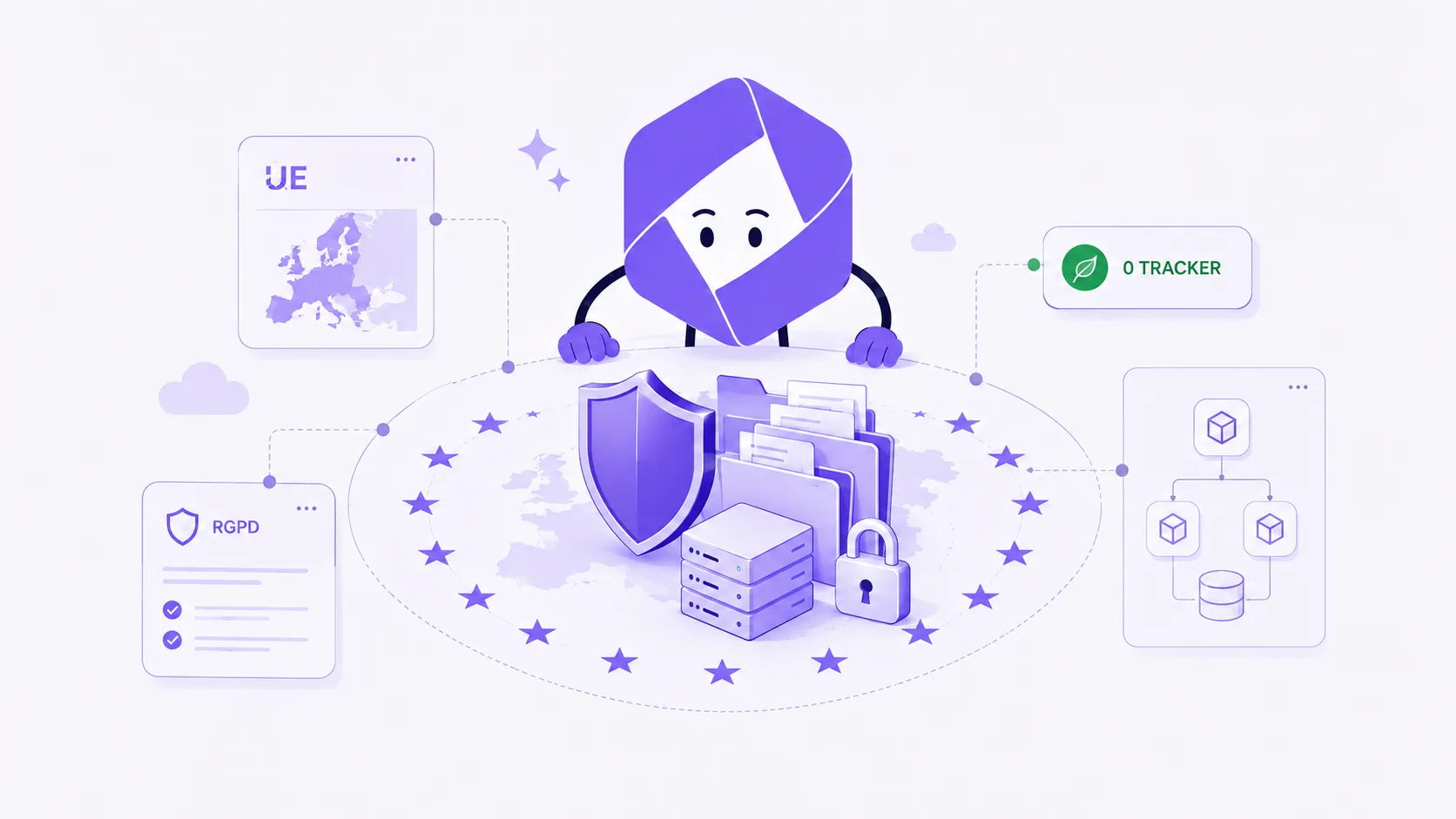
“Hosted in Europe” isn’t just a marketing line. It’s a choice that is technical, legal and ethical all at once — made on day one, it becomes invisible; deferred, it becomes a painful debt.
Why Europe
Three reasons, beyond the slogan:
- The legal framework. The GDPR strictly governs the processing of personal data. Hosting in the EU places that data under this protective law, and under European jurisdiction alone.
- Extraterritorial laws. A host subject to US law (CLOUD Act, FISA) can be compelled to hand over data — even when it is physically stored in Europe. True sovereignty means a European host, out of reach of those orders.
- The AI doesn’t learn from your data. The best code models are American today; we use them on the code and the specs, never on production data. That data stays in the EU, under no-retention and no-training terms (build ≠ run).
For business software, these guarantees aren’t a detail: it’s your customers’ data.
The cost of late compliance
Migrating data out of a non-European cloud once the product is in production means weeks of work and legal risk. Choosing EU infrastructure up front means… one line of configuration.
Cookies and trackers: none by default
What we use
In practice, the whole infrastructure sits with a European host:
- Compute — virtual machines and clusters (orchestrated containers) to run the applications;
- Data — managed databases (PostgreSQL), SSD volumes, S3-compatible object storage;
- Network — private networks (VPC) isolating the components, behind a CDN;
- Services — serverless functions, transactional email, self-hosted audience measurement (cookie-free).
None of these choices sacrifices technical quality — and all keep data where European law applies.
Sovereignty isn’t a brake on performance. It’s a constraint you choose — and one you pay for mostly when you forget it.