Edited product
Flottt
A SaaS fleet-management platform — white-label, deployed as a dedicated, isolated instance per client. Designed, developed and deployed end to end as part of a commercial partnership.
- Model
- Partnership
- Scope
- End to end
- Distribution
- Mobibook
- NestJS
- Vue 3
- PostgreSQL / PostGIS
- Keycloak
- Redis / BullMQ
- Terraform
- Kamal
Running a fleet, without the bloat
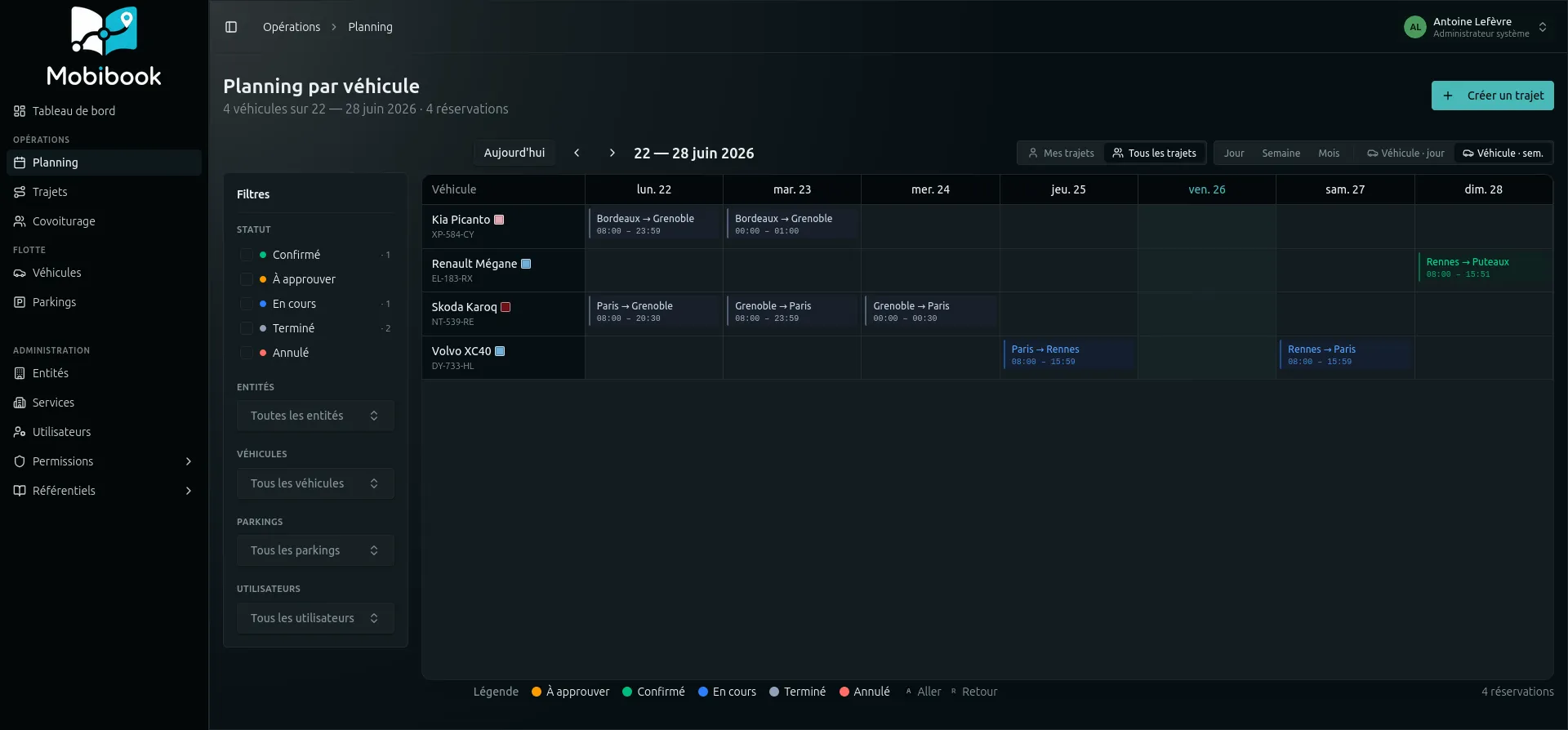
As soon as a company runs several vehicles, management gets complicated fast: who books what, when, from which branch, for which site? Off-the-shelf tools are often either rigid or oversized and out of reach for a small or mid-sized business.
Flottt answers that need: vehicle booking, trip tracking, management of car parks and sites, organisation across several entities (branches, sites, departments). A platform built to be clear for the end user, and solid for those who operate it.
It is an ongoing commercial partnership, currently in its testing phase with real client data, distributed by Mobicoop under the Mobibook brand.
What it looks like, concretely
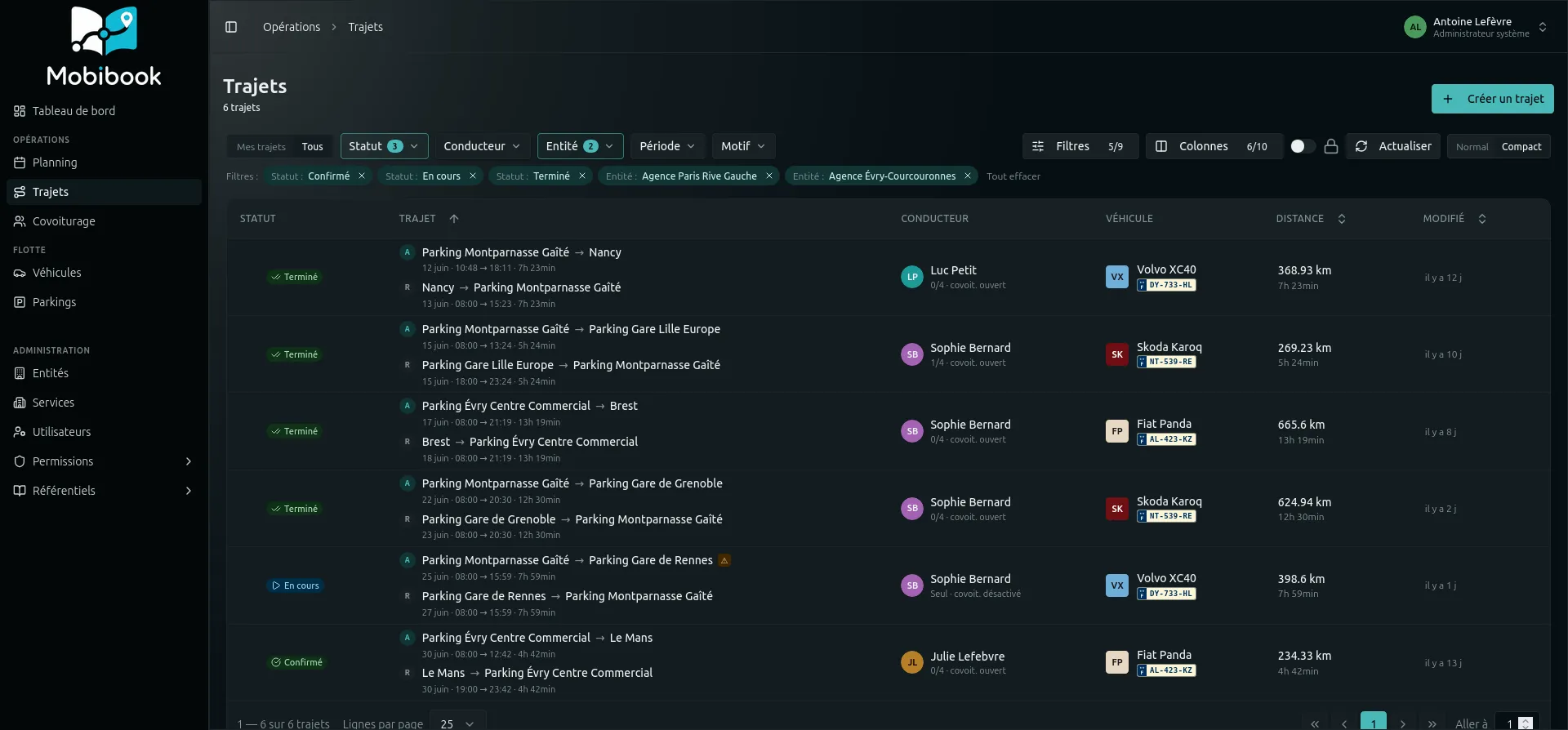
- Book a vehicle in a few clicks, with no double booking possible.
- Compute trips and distances automatically, via a routing engine and address geocoding.
- Offer internal carpooling: when several staff leave at the same time in the same direction, the tool suggests sharing a trip.
- Structure the fleet by entity (branch, site, department): each one only sees what concerns it.
- Adapt the look to each brand (logo, theme, application name) without duplicating the product.
A map view of trips and car parks is being integrated; the calculations already rely on a routing engine and a geocoding service.
More than a booking tool: a steering lever
The value of such a tool goes beyond day-to-day convenience: it helps an organisation take back control of its fleet, with a twofold economic and ecological stake.
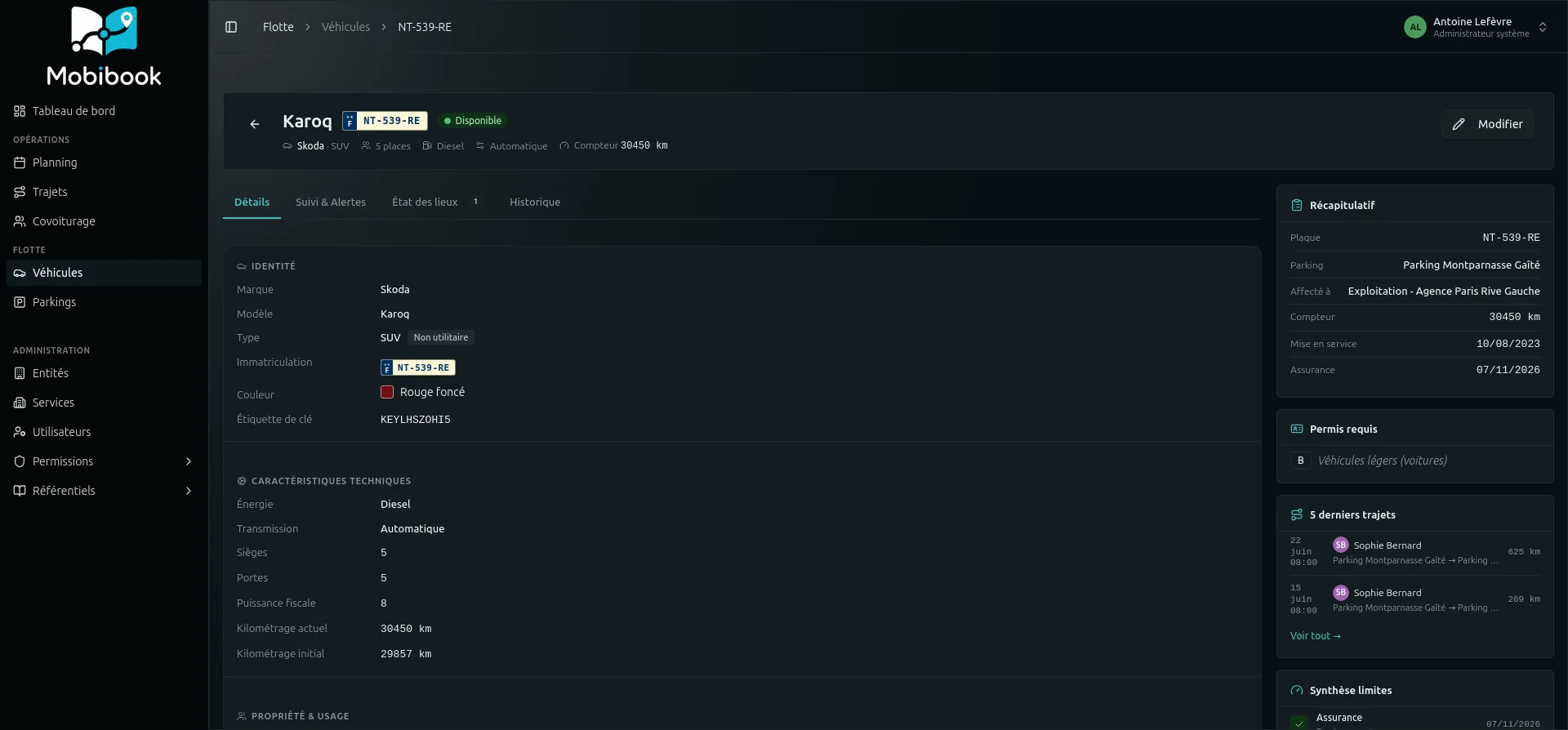
- Consolidate, or even shrink the fleet. By surfacing under-use and pooling vehicles across entities, the tool helps right-size the fleet — one vehicle fewer means that much less cost and fewer emissions.
- Master the cost (TCO). Usage history and internal re-invoicing give an economic reading of every trip and make users accountable.
- Cut the carbon footprint. Fewer vehicles on the road for the same need thanks to carpooling, and per-vehicle tracking to steer renewals toward the lowest-emission engines.
- Decide on facts. No promised percentage: the tool surfaces usage data so each organisation can measure its own outcome, on its own scope.
How it’s built — and why that’s reassuring
Flottt is not a prototype. It is a product run with the standards of software meant to last, which translates into as many guarantees for the client:
- A spec-driven method. Every change is specified, reviewed and traced before it is coded. The code follows the decision, never the other way around.
- Quality measured, not promised. Over 85% server-side test coverage, an automated end-to-end test suite, and an acceptance plan written in plain language, readable by the client.
- Security and privacy by design. Authentication delegated to Keycloak, fine-grained permissions (RBAC), and — above all — a dedicated, isolated instance per client: one client’s data never sits next to another’s.
- Professional deliverables. A normative technical memo ships with the product — the kind of document that reassures management and a procurement team.
- A reproducible deployment. The infrastructure is described as code (Terraform) and updates are data-safe: a new version ships without putting existing data at risk.
Under the hood
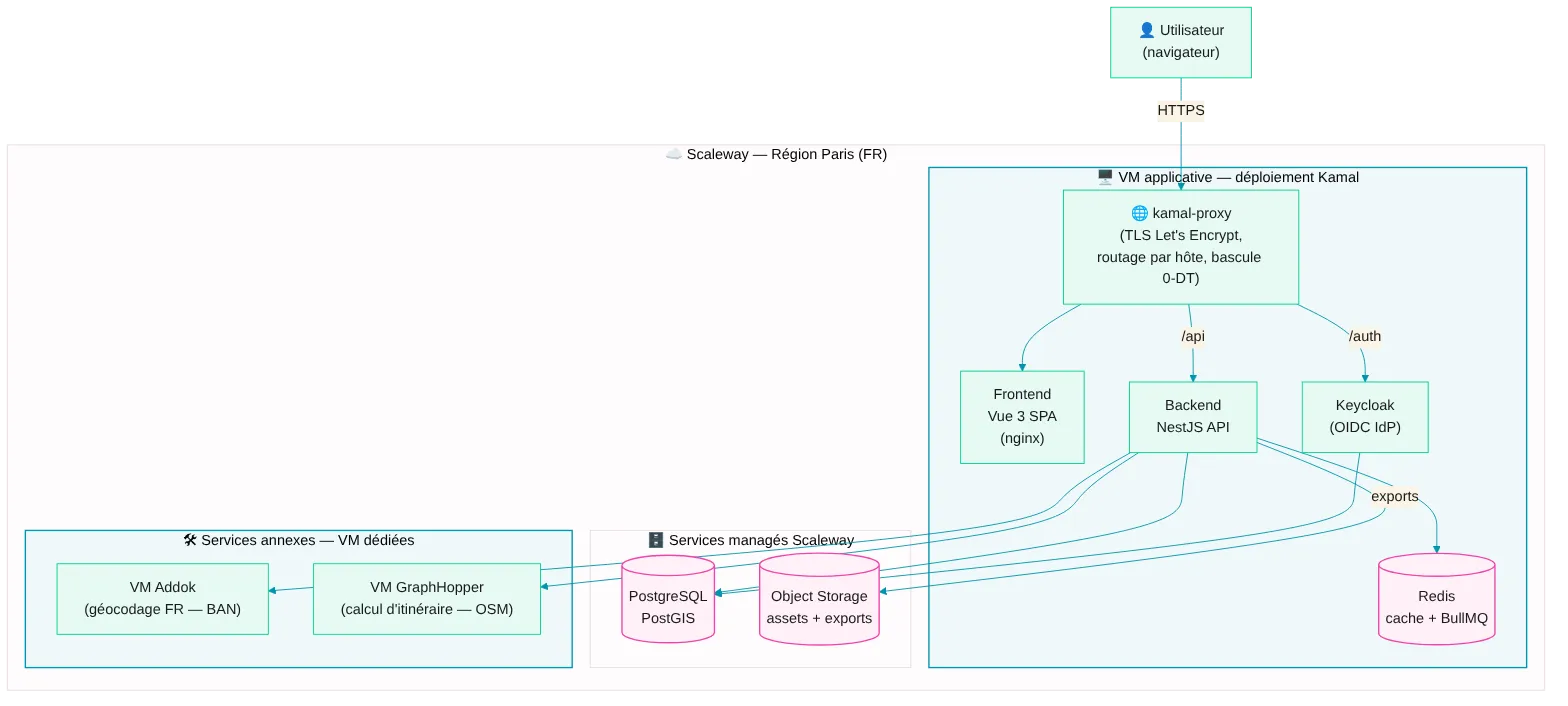
For technical teams, the architecture is built for maintainability and growth:
- Monorepo pnpm + Turborepo, shared types via a single source of truth (Zod).
- Backend NestJS — hexagonal architecture, CQRS and DDD; Prisma on PostgreSQL/PostGIS.
- Frontend Vue 3 (Composition API), Vite, Pinia, Tailwind.
- Services Keycloak (identity), Redis/BullMQ (job queues), Addok geocoding, GraphHopper routing.
- Infrastructure Terraform (Scaleway), Kamal, Ansible, automated deployments.
- Three-layer white-label model: product → brand → end client. A single codebase, with each client deployed on its own isolated instance (data, identity).
In short
Flottt is a complete product carried by a single expertise: from the business need to the deployed infrastructure, through design, development, security and testing. That is exactly the kind of end-to-end ownership I can bring to your project.